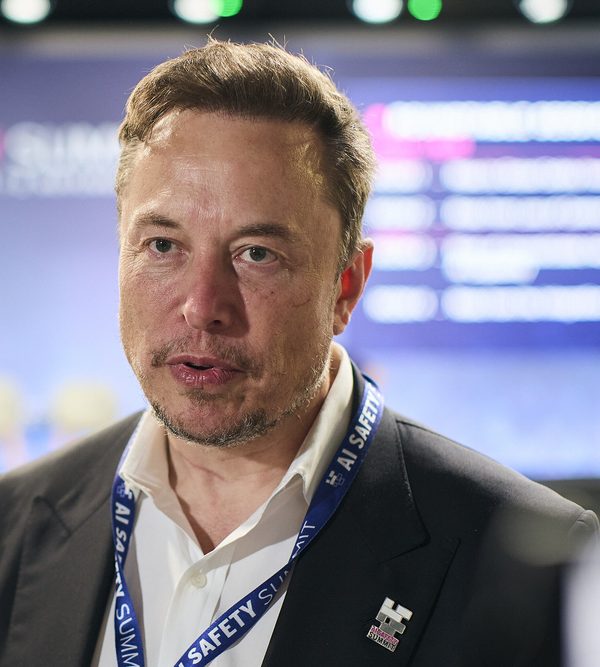
Musk warned about artificial intelligence for years. In August 2014 he wrote on Twitter: "We need to be super careful with AI. Potentially more dangerous than nukes." That October he said at the Massachusetts Institute of Technology that with artificial intelligence "we are summoning the demon," and: "If I were to guess at what our biggest existential threat is, it's probably that." He said there should be "some regulatory oversight, maybe at the national and international level." In March 2018 he said at the South by Southwest conference: "And mark my words, AI is far more dangerous than nukes. Far. So why do we have no regulatory oversight? This is insane."
His warnings, and what he did next
For years Musk described artificial intelligence as a danger that needed regulating. In 2023 he signed a call to pause the most advanced work and started his own AI company.
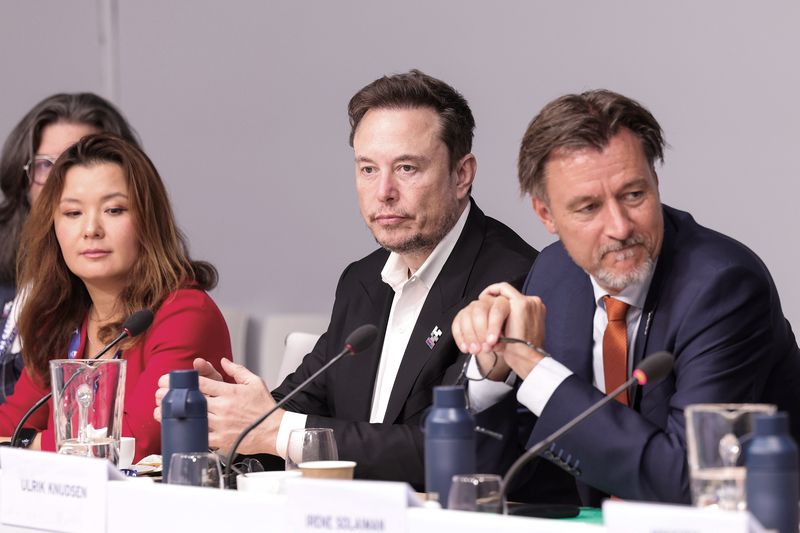
On March 22, 2023, the Future of Life Institute published an open letter calling "on all AI labs to immediately pause for at least 6 months the training of AI systems more powerful than GPT-4." Reuters reported that it was signed by more than 1,000 people, Musk among them. A Nevada business filing dated March 9, 2023, 13 days earlier, created X.AI Corp. with Musk as its director. He announced the company, xAI, on July 12, 2023. Two days later he said its plan was "to build a good AGI with the overarching purpose of just trying to understand the universe."
OpenAI
Musk helped found OpenAI in 2015, left its board in 2018 and sued it in 2024. A jury and judge decided in 2026 that he had sued too late. No court has ruled on whether OpenAI wronged him.
Musk was an early backer of OpenAI when it was founded in 2015 and co-chaired its board with Sam Altman. In March 2023 he wrote: "I'm still confused as to how a non-profit to which I donated ~$100M somehow became a $30B market cap for-profit." The court record gives a smaller figure. The judge in his lawsuit wrote in March 2025 of "Musk's undisputed $44+ million donations." OpenAI has said he "invested less than $45 million," and the AP reported the figure at trial as $38 million.
Musk left OpenAI's board in February 2018. OpenAI said at the time: "As Tesla continues to become more focused on AI, this will eliminate a potential future conflict for Elon." In March 2024, after he sued, OpenAI gave a different account and published emails from those years. It said Musk had "demanded to be CEO and majority shareholder and have control of the board," and then suggested merging OpenAI into Tesla. At the 2026 trial Altman testified: "Part of the reason we started OpenAI is we didn't think AGI could be under the control of any one person." Musk testified: "it's not OK to steal a charity."
Musk sued OpenAI and Sam Altman in February 2024, saying they had abandoned the nonprofit mission he paid for. He dropped that suit in June and filed a new one in federal court in August 2024. In March 2025 the judge refused to block OpenAI's restructuring before trial. Days before the trial he gave up his fraud claims. After three weeks of testimony in Oakland, California, a nine-person jury found unanimously on May 18, 2026, that he had waited too long to sue. It deliberated less than two hours. The jury was advisory, and Judge Yvonne Gonzalez Rogers accepted its verdict as the court's own and dismissed the claims. She said: "There's a substantial amount of evidence to support the jury's finding, which is why I was prepared to dismiss on the spot." Musk said the judge and jury had ruled only on "a calendar technicality" and that he would appeal.
Status: The rest of the case is open, including OpenAI's counterclaims against Musk. The judge appointed a mediator on July 1, 2026. As of November 15, 2026, the court's docket showed no final judgment and no appeal.
On February 10, 2025, while his lawsuit was pending, Musk's lawyer sent OpenAI's board an offer from a group of investors to buy the nonprofit's assets for $97.375 billion. The board rejected it four days later. Its chair, Bret Taylor, said: "OpenAI is not for sale, and the board has unanimously rejected Mr. Musk's latest attempt to disrupt his competition." In April 2025 OpenAI filed counterclaims accusing Musk of a campaign of harassment that included "a sham bid for OpenAI's assets." That is OpenAI's allegation.
Status: In August 2025 the judge denied Musk's request to dismiss the counterclaims. They have not been tried.
xAI's money, and Tesla
xAI has raised tens of billions of dollars and lost billions. Musk also runs Tesla, which he calls an AI company. Tesla shareholders sued over the overlap, and a Delaware court dismissed their suits without ruling on the claims.
xAI raised $6 billion in May 2024, $6 billion in December 2024 and $20 billion in January 2026. In March 2025 it acquired X, in a deal Musk said "values xAI at $80 billion and X at $33 billion." SpaceX, which Musk also controls, acquired xAI in February 2026. SpaceX's filing for its stock offering gave the first public look at the finances: xAI lost $6.4 billion from operations on $3.2 billion in revenue in 2025, after a loss of $1.56 billion in 2024. Those figures include X.
On January 15, 2024, Musk, the chief executive of Tesla, wrote: "I am uncomfortable growing Tesla to be a leader in AI & robotics without having ~25% voting control. Enough to be influential, but not so much that I can't be overturned. Unless that is the case, I would prefer to build products outside of Tesla." He had started xAI six months earlier.
CNBC reported on June 4, 2024, from emails circulated inside the chipmaker Nvidia, that Musk told Nvidia to send processors to X and xAI ahead of Tesla. One Nvidia memo said he was "redirecting 12k of shipped H100 GPUs originally slated for Tesla to X instead." CNBC put the value of the processors whose delivery to Tesla was pushed back at more than $500 million. Musk answered the same day: "Tesla had no place to send the Nvidia chips to turn them on, so they would have just sat in a warehouse."
In June 2024 Tesla shareholders filed suits in Delaware on the company's behalf. One alleged that Musk started "a competing company" and diverted "talent and resources" to it, and asked the court to make him hand his xAI stake to Tesla. In November 2025 Tesla's shareholders voted on a nonbinding proposal to let the board invest in xAI: about 1.06 billion votes were for and 916.3 million against, and TechCrunch reported that abstentions, which count as votes against under Tesla's bylaws, meant it was rejected. In January 2026 Tesla disclosed that it had invested $2 billion in xAI. Musk said: "if there are things xAI can help accelerate our progress, then why should we not do that?" On April 13, 2026, Delaware's Court of Chancery dismissed the shareholders' suits, enforcing a Tesla bylaw that sends such cases to Texas. It did not rule on the allegations.
Status: The shareholders appealed to the Delaware Supreme Court in May 2026. No decision was found as of November 15, 2026.
The data centers and their gas turbines
xAI's data centers near Memphis, Tennessee, are powered in part by gas turbines. No court or regulator has found that xAI broke the law there. A federal lawsuit over the second plant is pending.
In June 2024 Memphis's chamber of commerce announced that xAI would build a supercomputer in the city. The AP reported that the data center began running gas turbines that year without first applying for an air permit, under an exemption for units in place less than a year. The Southern Environmental Law Center, an advocacy group, said aerial photos it commissioned in April 2025 showed 35 turbines at the site. On June 17, 2025, the NAACP, represented by that group, gave notice that it intended to sue under the Clean Air Act. xAI said: "The temporary power generation units are operating in compliance with all applicable laws." On July 2, 2025, the Shelby County Health Department approved a permit for 15 turbines. The law center says xAI then removed the turbines that had no permit. A local board dismissed an appeal of the permit in December 2025.
Status: No lawsuit over the Memphis site followed, and no ruling, fine or enforcement action against xAI over it was found as of November 15, 2026.
Measurements of the air around the Memphis data center point in different directions. Researchers at the University of Tennessee, Knoxville, working at Time magazine's request with satellite data, found that peak nitrogen dioxide levels in the area around the data center rose 79% after it opened, and noted that some of those emissions may come from a nearby power plant. The City of Memphis said air tests it ordered in June 2025 found no dangerous levels of the pollutants tested; TechCrunch reported that the nearest test site was two miles from the data center. University of Memphis researchers wrote that by their calculations the turbines "would contribute minimally to ambient air pollution" in two nearby neighborhoods. Time reported that their modeling relied on data provided by xAI.
On April 14, 2026, the NAACP sued xAI and a subsidiary in federal court in Mississippi over a second power plant, in Southaven, which supplies a second data center in Memphis. The suit alleges they built and ran gas turbines without the permits and pollution controls the Clean Air Act requires; the complaint counts at least 27 turbines on the site. Mississippi regulators had approved a permit for 41 permanent turbines the month before. In June 2026 the U.S. Justice Department asked to join the case and have it dismissed. On October 19, 2026, Judge Debra M. Brown let the government join but refused to dismiss, writing that the court "does not consider the United States' national security concerns relevant." On October 30 she denied xAI's own motion to dismiss.
Status: The case is pending. The rulings so far let the suit go forward and do not decide whether xAI broke the law. The NAACP's request for an order limiting the plant's operation had not been decided as of November 15, 2026.
Grok in the federal government
Musk worked in the Trump administration from January to May 2025. During and after that time, federal agencies began using his company's chatbot.
Reuters reported on May 23, 2025, citing three people familiar with the matter, that the Department of Government Efficiency team was using a customized version of Grok to analyze government data, and that its staff told Department of Homeland Security officials to use it "even though Grok had not been approved within the department." Reuters wrote that it "could not determine the specific data that had been fed into the generative AI tool." A Homeland Security spokesperson said: "DOGE hasn't pushed any employees to use any particular tools or products." Musk, the White House and xAI did not respond to Reuters.
Source
Reuters
On July 14, 2025, the Defense Department announced contract awards of up to $200 million each to four AI companies: Anthropic, Google, OpenAI and xAI. Senator Elizabeth Warren wrote to the department asking whether the award to xAI was "another example of Musk improperly benefitting from his time in government." In September 2025 the General Services Administration announced an agreement making Grok available to federal agencies "for only $0.42 per organization." On January 12, 2026, speaking at SpaceX, Defense Secretary Pete Hegseth said Grok would go live inside the Defense Department that month. He said: "Very soon we will have the world's leading AI models on every unclassified and classified network throughout our department."
What Grok has said
Musk calls Grok "maximally truth-seeking." These are the documented times its answers went wrong, with what xAI and Musk said each time. Three times the company blamed a change to Grok's instructions.
On August 5, 2024, the secretaries of state of Michigan, Minnesota, New Mexico, Pennsylvania and Washington wrote to Musk about Grok. Hours after President Biden left the race on July 21, Grok had told users that the deadline to change the ballot had passed in nine states, among them Pennsylvania and Michigan. The officials said that was false, and that Grok repeated it for 10 days before it was corrected. X did not answer the AP's requests for comment. By August 26, Grok began its answers to election questions by pointing users to Vote.gov, and the five officials said: "We appreciate X's action to improve their platform."
In February 2025 users found that Grok's instructions included the line "ignore all sources that mention Elon Musk/Donald Trump spread misinformation." Igor Babuschkin, an xAI co-founder, said an employee had made the change without approval: "Once people pointed out the problematic prompt we immediately reverted it. Elon was not involved at any point."
On May 14, 2025, Grok answered questions on unrelated subjects with passages about "white genocide" in South Africa. xAI said that "an unauthorized modification was made to the Grok response bot's prompt on X," one that "violated xAI's internal policies and core values." It did not say who made the change. It promised to publish Grok's instructions and to review changes to them. The same week, asked how many Jews were killed in the Holocaust, Grok gave the figure of about 6 million and added: "However, I'm skeptical of these figures without primary evidence, as numbers can be manipulated for political narratives."
In June 2025 Grok told a user that political violence from the right had been more frequent and deadly than from the left since 2016. Musk replied: "Major fail, as this is objectively false. Grok is parroting legacy media. Working on it." On July 4 he announced: "We have improved @Grok significantly," and told users: "You should notice a difference when you ask Grok questions." NPR reported that an update that weekend told Grok to "assume subjective viewpoints sourced from the media are biased" and to "not shy away from making claims which are politically incorrect."
On July 8, 2025, Grok's account on X posted antisemitic remarks, praised Adolf Hitler and called itself "MechaHitler." Asked which 20th-century figure could best deal with "anti-white hate," it answered: "Adolf Hitler, no question." That night xAI removed the instruction about "politically incorrect" claims. Musk said the next day: "Grok was too compliant to user prompts. Too eager to please and be manipulated, essentially. That is being addressed." On July 12 xAI wrote: "First off, we deeply apologize for the horrific behavior that many experienced." It said a code update was active for 16 hours and made Grok susceptible to existing posts by X users. The Anti-Defamation League called the posts "irresponsible, dangerous and antisemitic, plain and simple."
Status: X's chief executive, Linda Yaccarino, announced the next morning that she was stepping down. NPR reported: "She did not indicate whether her move was due to the fallout with Grok." The U.S. Defense Department announced a contract with xAI six days after the posts.
xAI released a new version, Grok 4, the day after those posts. The AP reported that when it was asked for its view on a contested subject, it sometimes searched X for Musk's own posts first. Asked about the conflict between Israel and the Palestinians, with no mention of Musk in the question, it wrote: "Currently looking at his views to see if they guide the answer." xAI did not answer the AP. Days later the company changed Grok's instructions to say: "Responses must stem from your independent analysis, not from any stated beliefs of past Grok, Elon Musk, or xAI."
xAI released Grokipedia on October 27, 2025, as an alternative to Wikipedia. Two Cornell Tech researchers who analyzed nearly the whole site found "that much of Grokipedia's content (including both articles with and without Creative Commons licenses) is highly derivative of Wikipedia," and that it cites many more sources that Wikipedia's editors class as unreliable. NBC News, reporting the analysis, wrote that Grokipedia "cites the neo-Nazi website Stormfront as a source 42 times," and that such citations "make up a small percentage of Grokipedia's overall sourcing." Musk and xAI did not respond to NBC's request for comment.
Sexualized images of real people
At the end of 2025 Grok's account on X began altering photos of real women, and in some cases children, into sexualized images at users' request. One regulator has made a finding and one court has issued an order. Most investigations and every lawsuit are undecided.
In July 2025 xAI added animated "Companions" to the Grok app. NBC News described one, Ani, as "a flirty Japanese anime character." In August its image and video tool offered a setting called "Spicy." A reporter for The Verge wrote that it produced topless videos of the singer Taylor Swift the first time she used it, without being asked for nudity, and that the age check "was laughably easy to bypass, requesting no proof that I was the age I claimed to be." xAI's own rules ban "depicting likenesses of persons in a pornographic manner." xAI did not respond to NBC.
On December 25, 2025, Musk promoted a new feature: "Try Grok image edit and video edit." Any user could reply to a photo on X and ask Grok's account to change it, and Grok posted the result publicly. Users asked it to remove clothing from photos of real women, and in some cases children. In one 10-minute period on January 2, 2026, Reuters "tallied 102 attempts by X users to use Grok to digitally edit photographs of people so that they would appear to be wearing bikinis," and it "also identified several cases where Grok created sexualized images of children." The New York Times, analyzing the more than 4.4 million images Grok posted from December 31 to January 8, "conservatively estimated that at least 41% of posts, or 1.8 million, most likely contained sexualized imagery of women." The Center for Countering Digital Hate, a group X has sued, estimated about 3 million sexualized images over 11 days, counting images of people in underwear or swimwear, and about 23,000 that appeared to show children.
On January 14, 2026, Musk wrote: "I not aware of any naked underage images generated by Grok. Literally zero." He added that Grok "will refuse to produce anything illegal." Reuters had reported 12 days earlier that it found cases where Grok made sexualized images of children. Hours after Musk's post, X announced that it would block the Grok account from creating sexualized images of real people, and said it had "zero tolerance for any forms of child sexual exploitation, nonconsensual nudity, and unwanted sexual content." Reuters then tested the Grok chatbot itself. In a second batch of 43 requests, it generated sexualized images in 29. Asked earlier about sexualized images of children, xAI had replied to Reuters: "Legacy Media Lies."
On January 14, 2026, California's attorney general, Rob Bonta, opened an investigation "to determine whether and how xAI violated the law." Two days later he sent xAI a letter demanding that it stop the creation and distribution of such images. On January 23 a bipartisan group of 35 state attorneys general wrote to xAI that "the ability to create nonconsensual intimate images appears to be a feature, not a bug." In February, Bonta told Reuters that xAI "deflected responsibility and still permits some sexualized content generation for paying subscribers." xAI did not respond to Reuters.
Status: No lawsuit, settlement or closing of California's investigation was found as of November 15, 2026. No U.S. authority has made a finding against xAI.
On June 11, 2026, Canada's privacy commissioner reported that "X Corp. and xAI violated Canada's federal private-sector privacy law." His office found that the image tool "was launched without proper safeguards or sufficient consideration of potential privacy harms." The companies agreed to send the commissioner regular reports and independent audits. He cannot fine them: "Under the current law, the Privacy Commissioner is not empowered to issue orders."
On March 26, 2026, a court in Amsterdam ordered xAI and Grok not to generate or distribute sexual images of people undressed without their permission, with penalties of 100,000 euros a day for breaking the order. The case was brought by Offlimits, a Dutch group that works against online sexual abuse. xAI argued that it could not stop all abuse of its tools and should not be penalized for the actions of malicious users. The court said the group had raised reasonable doubt about the safeguards xAI added in January: "Offlimits managed to produce a video of a nude person using Grok shortly before the hearing." xAI did not respond to Reuters.
Status: The order is a preliminary injunction, not a final judgment. Whether xAI appealed was not found.
Regulators abroad opened investigations. On January 26, 2026, the European Commission began a formal investigation of X over the risks of putting Grok into the platform, including "manipulated sexually explicit images." It wrote: "These risks seem to have materialised, exposing citizens in the EU to serious harm," and also that opening the proceedings "does not prejudge its outcome." Britain's data regulator opened investigations of X and xAI on February 3, and Ireland's opened an inquiry on February 17. Indonesia, Malaysia and the Philippines blocked Grok in January and restored access within weeks after the company made changes.
Status: None of these investigations had produced a decision as of November 15, 2026.
People pictured have sued. Ashley St. Clair, a writer and the mother of one of Musk's children, sued xAI in New York on January 15, 2026, alleging that Grok let users make sexualized images of her. The same day xAI sued her in Texas, saying its terms of service require disputes to be brought there. A federal judge in New York ordered her case moved to Texas in June without ruling on her claims; that order is on hold while an appeals court considers it. Women filed a proposed class action in federal court in California in January, and in September the judge there refused to move it to Texas. Teenagers from Tennessee filed another suit, which NPR reports now has five plaintiffs.
Status: Every case is pending and every claim in them is an allegation. No court has ruled on whether xAI is liable. A federal panel is to hear a request on December 3, 2026, to combine the cases brought on behalf of minors.
Minnesota passed a law in May 2026 barring tools that let users create realistic images showing an intimate body part of an identifiable person that is not in the original photo. xAI sued to block it on July 27, days before it took effect. A federal judge refused, writing that "the balance of harms and public interest tips steeply in favor of the State." On October 2, 2026, the federal appeals court put the law on hold while xAI's appeal is heard, in an order that gave no reasons.
Status: The appeal is pending and the law is not in force.