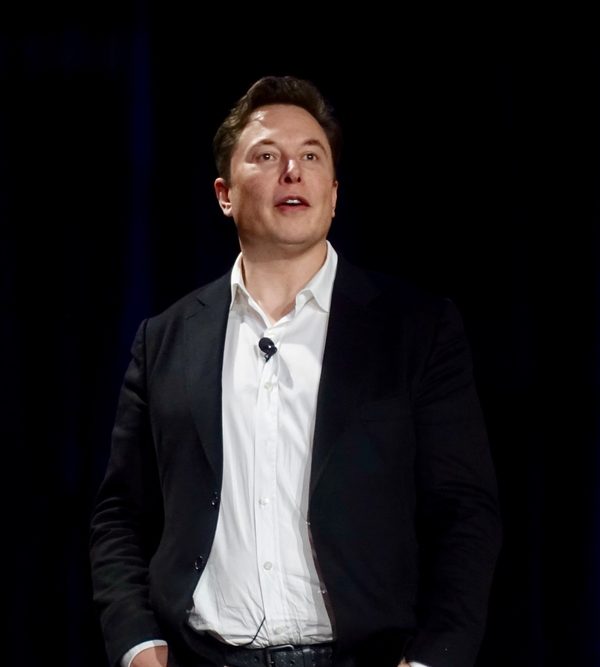
In December 2015 Musk told Fortune: "I think we will have complete autonomy in approximately two years." On October 19, 2016, he said that "all cars exiting the factory have hardware necessary for Level 5 Autonomy," and that Tesla's goal was a demonstration drive "of full autonomy all the way from LA to New York" by the end of 2017. In April 2017 he said: "November or December of this year, we should be able to go from a parking lot in California to a parking lot in New York, no controls touched at any point during the entire journey." A federal judge wrote in August 2025: "Tesla does not dispute that it has not yet provided the cross-country capability that Musk touted in his statements."
The promises
Since 2015 Musk has said, year after year, that Teslas were about to drive themselves. A prediction that did not come true is not a lie, and no court has found these were. Each is set beside what happened.
On April 22, 2019, at an event for investors, Musk said: "next year for sure, we'll have over a million robotaxis on the road," and added: "The fleet wakes up with an over the air update; that's all it takes." He meant the cars Tesla would have sold by then, which a software update would turn into driverless taxis. The same day he said: "it's financially insane to buy anything other than a Tesla." Ten days earlier he had said: "if you buy a Tesla today, I believe you are buying an appreciating asset." Tesla's first paid rides with no employee in the car came in January 2026, in Austin, Texas. In September 2026 Tesla had 420 autonomous vehicles registered in Texas.
The predictions continued. July 2020: "I remain confident that we will have the basic functionality for level five autonomy complete this year." January 2021: "I'm highly confident the car will drive itself for the reliability in excess of a human this year." January 2022: "I would be shocked if we do not achieve full self-driving safer than human this year." July 2023: "I know I'm the boy who cried FSD." January 2025: "I think we will most likely release unsupervised FSD in many regions of the country of the U.S. by the end of this year." July 2025: "I think we'll probably have autonomous ride hailing in probably half the population of the U.S. by the end of the year." At the end of 2025 Tesla's driverless service ran in one city, Austin, with Tesla employees in the cars. He has said of his own record: "I've been wrong in the past. I may be wrong this time."
Tesla sold cars from 2019 to 2023 with a computer it calls Hardware 3. On January 29, 2025, Musk said: "I think the honest answer is that we're going to have to upgrade people's Hardware 3 computer for those that have bought full self-driving." He added: "Now I'm kind of glad that not that many people bought the FSD package." On April 22, 2026, he said: "Hardware 3 simply does not have the capability to achieve unsupervised FSD." Buyers had paid up to $15,000 for the software.
Status: Tesla has said it will replace the hardware for those who bought the software and has not said when. A lawsuit filed in June 2026 alleges no replacements have been made; that is an allegation.
Shareholders sued Tesla and Musk in 2023, saying his self-driving statements from 2019 to 2023 misled investors. A federal judge dismissed the suit, and on December 2, 2025, a federal appeals court agreed. It wrote that the shareholders "failed to allege that Musk did not honestly believe reaching full autonomy was possible on his suggested timeline," and that Tesla had repeatedly warned investors the technology might not arrive as quickly as planned.
How it was sold
Tesla sold two products, Autopilot and Full Self-Driving, that require a driver's full attention. A California agency found the names misleading. Other cases over the marketing are undecided or went Tesla's way.
On October 20, 2016, Tesla released a video of a Model X driving through streets near its headquarters. It opened with the words: "The person in the driver's seat is only there for legal reasons. He is not doing anything. The car is driving itself." Musk posted it, writing: "Tesla drives itself (no human input at all) thru urban streets to highway to streets, then finds a parking spot." In 2022 Ashok Elluswamy, Tesla's director of Autopilot software, testified in a lawsuit. Asked whether the video showed the performance of the system available in a production car at the time, he said: "It does not." He said the car followed a route mapped in advance, that drivers took control during test runs, and that a test car hit a fence in Tesla's parking lot while the team tried to film it parking itself. Bloomberg reported, from emails it saw, that Musk had written to the team: "I will be telling the world that this is what the car 'will' be able to do," and "not that it can do this upon receipt."
California's Department of Motor Vehicles accused Tesla in 2022 of false advertising. After a hearing, an administrative law judge found that the name "Full Self-Driving Capability is actually, unambiguously false and counterfactual," and that none of the cars sold with it "ever has become fully autonomous through subsequent software updates." On the name Autopilot, she wrote that Tesla "follows a long but unlawful tradition" of using ambiguity to mislead consumers. The department adopted her findings on December 16, 2025. She had proposed suspending Tesla's licenses to make and sell cars in California for 30 days; the department put the suspensions on hold and gave Tesla 60 days to stop using the Autopilot name for features that do not make a car autonomous. Tesla did, the department said in February 2026. The judge also found no evidence either way on whether anyone had been confused or harmed, and ordered no restitution.
Status: Tesla sued in February 2026 to reverse the decision, saying the department never proved consumers were confused. No ruling was found as of November 15, 2026.
Buyers sued Tesla in 2022, saying they paid for a self-driving capability their cars did not have. In August 2025 a federal judge let California buyers who paid for Full Self-Driving from 2016 to 2024 sue as a class, over two statements: that the cars had the hardware needed, and that a Tesla would drive itself across the country. On October 16, 2026, a federal appeals court undid that, ruling that the judge could not presume every buyer had seen the hardware statement. It did not decide whether the statement was false. Tesla's position, in a court filing: "Mere failure to realize a long-term, aspirational goal is not fraud."
Status: The first case continues without a class. A second proposed class action, over Hardware 3, was filed in June 2026. Both are allegations.
Most companies building self-driving cars use laser and radar sensors as well as cameras. In April 2019 Musk said: "Lidar is a fool's errand," and: "Anyone relying on lidar is doomed." In May 2021 Tesla removed radar from its new cars. The Washington Post reported, citing former employees who spoke anonymously, that Musk wanted to cut the cost, that "some Tesla engineers were aghast," and that he "was unconvinced and overruled his engineers." California's motor vehicle department found that since mid-2022 Tesla's new cars "have used only cameras." Musk and Tesla did not respond to the Post.
Tesla's software, now named Full Self-Driving (Supervised), requires an attentive driver. In October 2025 the federal highway safety agency asked Tesla about a mode called "Mad Max" that drives at higher speeds than other versions. The agency said: "The human behind the wheel is fully responsible for driving the vehicle and complying with all traffic safety laws." At Tesla's shareholder meeting in November 2025 Musk said: "We're actually getting to the point where we almost feel comfortable allowing people to text and drive." On December 4, replying to a driver who noticed the software no longer warned him when he used his phone, Musk wrote that the update allows it "depending on context of surrounding traffic." Tesla's own manual says: "Do not use handheld devices while using Autopilot features."
What crash investigators found
The National Transportation Safety Board investigated three deaths in Teslas driving on Autopilot. The board makes no legal findings. It can recommend changes but cannot order them.
Joshua Brown, 40, of Canton, Ohio, died on May 7, 2016, near Williston, Florida, when his Tesla Model S, with Autopilot on, drove under a tractor-trailer that was turning across a divided highway. The National Transportation Safety Board found that in the 37 minutes the car was under automated control, his hands were on the wheel for 25 seconds, and that the system "was not designed to, and did not, identify the truck crossing the car's path." It gave the probable cause as the truck driver's failure to yield, "combined with the car driver's inattention due to overreliance on vehicle automation." It said the system's design contributed, because it "permitted his prolonged disengagement from the driving task." The board's chairman said: "Tesla allowed the driver to use the system outside of the environment for which it was designed." Tesla said it would evaluate the board's recommendations. The federal highway safety agency had closed its own investigation of the crash in January 2017 without identifying a defect.
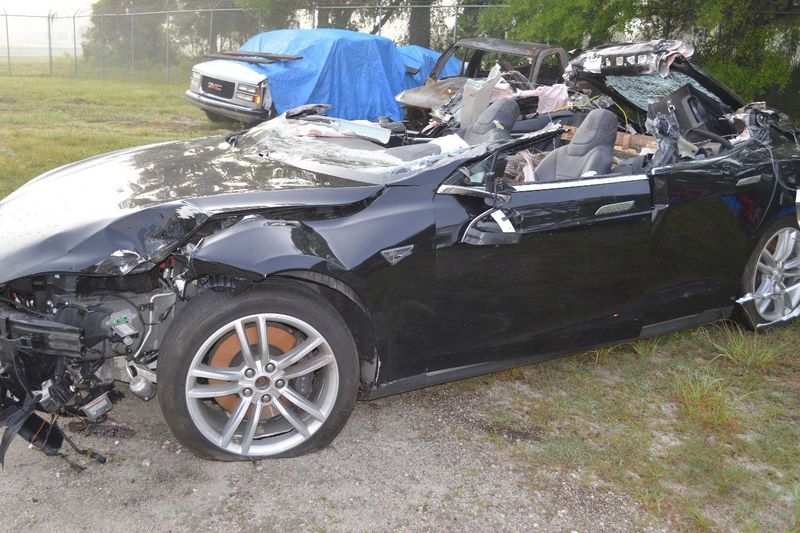
Walter Huang died on March 23, 2018, when his Tesla Model X, with Autopilot on, left its lane on a highway in Mountain View, California, and hit a crash barrier. The safety board gave the probable cause as "the Tesla Autopilot system steering the sport utility vehicle into a highway gore area due to system limitations, and the driver's lack of response due to distraction likely from a cell phone game application and overreliance on the Autopilot partial driving automation system." It said Tesla's "ineffective monitoring of driver engagement" contributed. It also found that he likely would have lived if a damaged cushion at the end of the barrier had been repaired. The report noted that five carmakers had answered the board's 2017 recommendation to limit where such systems can be used, and added: "Tesla, however, has not responded."
Status: Huang's family sued Tesla. The case was settled in April 2024, the day before trial, for an undisclosed amount.
Jeremy Banner, 50, died on March 1, 2019, when his Tesla Model 3 drove under a tractor-trailer crossing a highway near Delray Beach, Florida, the same kind of crash that killed Joshua Brown three years earlier. The system did not detect his hands on the wheel for the final 7.7 seconds. The safety board gave the probable cause as the truck driver's failure to yield, combined with Banner's "inattention due to overreliance on automation." It added: "Contributing to the crash was the operational design of Tesla's partial automation system, which permitted disengagement by the driver, and the company's failure to limit the use of the system to the conditions for which it was designed." Tesla said Banner had not used Autopilot at any other time on that drive.
Status: Banner's family sued Tesla. A confidential settlement was disclosed in a court filing on July 7, 2025.
After Joshua Brown's death the safety board made two recommendations to Tesla and five other carmakers: limit these systems to the conditions they were designed for, and find better ways to sense whether the driver is paying attention. In February 2020 the board's chairman said that of the six carmakers, only Tesla had failed to respond. On October 25, 2021, the board's chair, Jennifer Homendy, wrote to Musk that Tesla was testing its Full Self-Driving software on public roads "without first addressing the very design shortcomings" that allowed the fatal crashes the board had investigated. She wrote: "If you are serious about putting safety front and center in Tesla vehicle design, I invite you to complete action on the safety recommendations we issued to you four years ago."
The federal safety regulator
The National Highway Traffic Safety Administration can require recalls. An open investigation is not a finding of a defect, and its crash figures count crashes in which the system was in use, not crashes the system caused.
On December 12, 2023, Tesla recalled 2,031,220 vehicles, every Tesla sold in the United States with the Autosteer feature, for a software update adding alerts and controls. Its recall report said the feature's controls "may not be sufficient to prevent driver misuse," and that Tesla was acting while "not concurring with the agency's analysis." Closing its investigation on April 25, 2024, the federal highway safety agency said it had reviewed 956 crashes and "identified at least 13 crashes involving one or more fatalities and many more involving serious injuries, in which foreseeable driver misuse of the system played an apparent role." It wrote that Tesla's "weak driver engagement system was not appropriate for Autopilot's permissive operating capabilities," that this gap "led to foreseeable misuse and avoidable crashes," and that a comparison with other carmakers "identified Tesla as an industry outlier."
Status: The same day, the agency opened a review of whether the recall worked, citing crashes after the update and noting that part of the fix "requires the owner to opt in." As of November 15, 2026, the agency's public record shows that review still open.
In October 2024 the highway safety agency opened an investigation of Tesla's Full Self-Driving software after four crashes in sun glare, fog or dust. "In one of the crashes, the Tesla vehicle fatally struck a pedestrian." Bloomberg identified her as Johna Story, 71, struck on an Arizona highway in November 2023 after she got out of her car at the scene of an earlier crash. On March 18, 2026, the agency upgraded the investigation to an engineering analysis, the stage before it can seek a recall, covering an estimated 3,203,754 vehicles. It wrote that in the crashes it reviewed, "the system did not detect common roadway conditions that impaired camera visibility and/or provide alerts when camera performance had deteriorated until immediately before the crash occurred." A second investigation, opened in October 2025, covers reports of the software running red lights and breaking other traffic laws in an estimated 2,882,566 vehicles.
Status: Both investigations are open and neither has produced a recall. A third, into a feature that summons the car remotely, was closed in April 2026 after Tesla sent software updates; the agency said almost all of those crashes involved minor property damage. The lawsuit by Story's daughter against Tesla and the driver was settled in 2026 on undisclosed terms.
Since 2021 the highway safety agency has required carmakers to report serious crashes in which a driver-assistance system was in use. On August 19, 2025, it opened an audit of Tesla after finding reports of crashes that "occurred several months or more before the dates of the reports," when the order required a report within one or five days. Tesla told the agency the delay came from a problem with its data collection, which it said had been fixed. In closing its Autopilot investigation the year before, the agency had written: "Tesla is not aware of every crash involving Autopilot even for severe crashes because of gaps in telematic reporting."
Status: As of November 15, 2026, the agency's public record shows the audit still open. No penalty has been announced.
Tesla publishes its own crash figures, and Musk told shareholders in June 2024: "it's very clear that the safety per mile is better than human driving." Independent reviewers have said the comparison cannot be checked. A University of Virginia researcher who adjusted Tesla's figures for 2018 to 2021 for the share of driving done on freeways, where crashes are rarer, found that the 43% lower crash rate claimed for Autopilot "reduces to 10%." The highway safety agency wrote in 2024: "Gaps in Tesla's telematic data create uncertainty regarding the actual rate at which vehicles operating with Autopilot engaged are involved in crashes." The Insurance Institute for Highway Safety, which is funded by insurers, rated the safeguards of 14 driver-assistance systems in March 2024. Eleven were rated poor, Tesla's among them, and its president said: "there is little evidence it makes driving safer." A former Tesla policy executive told NPR that the rate of crashes is "quite low."
In court
Three lawsuits over crashes on Autopilot have gone to a jury. Tesla won two and lost one, and has settled others on confidential terms. A settlement is not a finding, and in every case here the defendant was Tesla, not Musk.
Tesla won the first two trials. On April 21, 2023, a Los Angeles jury awarded nothing to Justine Hsu, who said her Model S swerved into a curb on Autopilot. Tesla said she had used Autopilot on city streets against the manual's warning. On October 31, 2023, a jury in Riverside County, California, found by a vote of 9 to 3 that the Model 3 in which Micah Lee died in 2019 did not have a manufacturing defect. Tesla said Lee had consumed alcohol before driving and that it was unclear whether Autopilot was engaged. "The jury's conclusion was the right one," the company said.
On August 1, 2025, a federal jury in Miami found Tesla partly at fault for a crash in Key Largo, Florida, on April 25, 2019. A Model S on Autopilot went through a stop sign at a T-intersection while its driver reached for a phone he had dropped, and hit a parked vehicle. Naibel Benavides Leon, 22, who was standing beside it, was killed, and Dillon Angulo was seriously injured. The jury found for the plaintiffs on defective design and failure to warn, put 33% of the responsibility on Tesla and 67% on the driver, and found Tesla liable for punitive damages. The judgment against Tesla was $242,570,000, of which $200 million was punitive. Reuters reported that Tesla had rejected a proposal to settle for $60 million. "Today's verdict is wrong," Tesla said. It says the driver alone was to blame.
Status: On February 19, 2026, the judge denied Tesla's request for a new trial, writing that "the evidence admitted at trial more than supports the jury verdict." Tesla appealed on March 16, 2026, to the federal appeals court in Atlanta, which has not ruled.
Before the Key Largo trial, the judge ruled on a dispute over the car's crash data. "Tesla maintained throughout discovery that it never received the complete snapshot package" from the car, she wrote, but "Tesla possessed the snapshot package on its servers all along." The plaintiffs had recovered the data themselves from the car's computer. The judge ordered Tesla to pay the plaintiffs' costs and declined harsher penalties, writing: "the Court is not persuaded that Tesla willfully withheld information or deliberately attempted to destroy evidence." Tesla's lawyer told the jury: "We didn't think we had it, and we found out we did."
Tesla has settled other lawsuits over deaths on its driver-assistance systems shortly before trial, each on confidential terms: Walter Huang's family in April 2024; Jeremy Banner's family, disclosed in July 2025; and, in September 2025, two cases over crashes in California in 2019. One was brought by the family of Jovani Maldonado, 15, who was riding in his father's vehicle when a Tesla Model 3 on Autopilot struck it. The other was brought over the deaths of Gilberto Alcazar Lopez and Maria Guadalupe Nieves-Lopez, whose car was hit by a Tesla Model S on Autopilot that ran a red light in Gardena. A fifth settlement, in the death of Johna Story, was reported in July 2026.
The driver in the Gardena crash, Kevin Aziz Riad, pleaded no contest to two counts of vehicular manslaughter with gross negligence and was sentenced to probation in June 2023. The AP described the case as believed to be the first time in the United States that prosecutors brought felony charges against a motorist who was using a partially automated driving system.
Source
AP
Tesla disclosed in 2023 that the Justice Department had asked for documents about Autopilot and Full Self-Driving and had issued subpoenas. Reuters reported on May 8, 2024, citing three people familiar with the matter, that federal prosecutors were "examining whether Tesla committed securities or wire fraud by misleading investors and consumers" about its cars' self-driving capabilities, and that the Securities and Exchange Commission was also investigating. Reuters wrote: "The probe, which is not evidence of wrongdoing, could result in criminal charges, civil sanctions, or no action." Tesla's lawyers have argued in court: "Mere failure to realize a long-term, aspirational goal is not fraud." Tesla has said that to its knowledge no government agency has concluded that any wrongdoing occurred.
Status: No charges have been reported. No report on the investigation later than May 2024 was found as of November 15, 2026.
The robotaxi service
Tesla began carrying passengers in driverless cars in 2025. The service exists and is growing. It is far smaller than Musk said it would be.
On October 10, 2024, at a film studio near Los Angeles, Musk showed the Cybercab, a two-seat car with no steering wheel or pedals. He said it would cost under $30,000 and be available "before 2027," and that Tesla expected to offer driving without supervision in Texas and California the next year. Attendees rode in about 20 Cybercabs inside the studio lot. Bloomberg reported four days later, citing people familiar with the matter, that Tesla "used humans to remotely control some capabilities of its Optimus robot prototypes" at the event, and that the robots "were able to walk without external control using artificial intelligence."
On January 29, 2025, Musk said: "We feel confident in being able to do an initial launch of unsupervised, no one in the car, full self-driving in Austin in June." The service began on June 22, 2025, for an invited group, with a Tesla employee in the front passenger seat of each car. Videos posted by riders in the first days showed a car driving for 10 seconds in a lane for oncoming traffic, with none in sight, and another exceeding a posted speed limit. The federal highway safety agency said: "NHTSA is aware of the referenced incidents and is in contact with the manufacturer to gather additional information." Tesla did not respond to requests for comment.
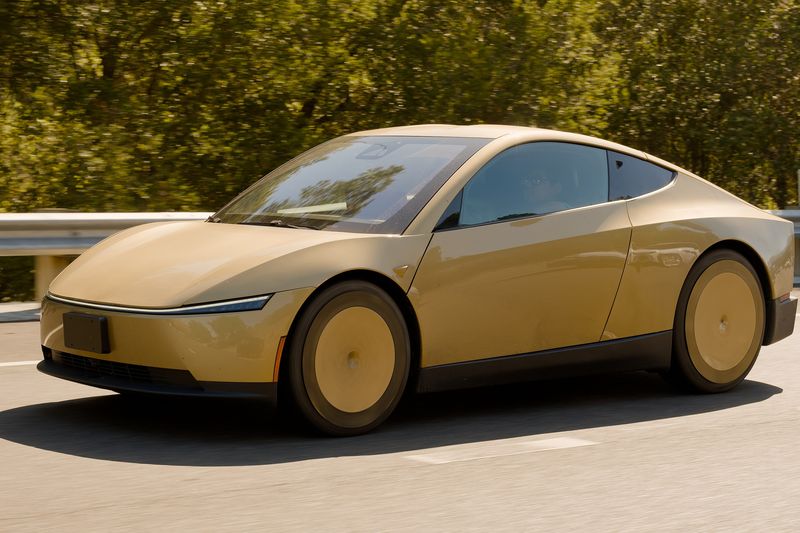
Tesla gave its first rides with no employee in the car on January 22, 2026, in Austin. A week later Musk said: "We expect to have fully autonomous vehicles in probably somewhere between a quarter and half of the United States by the end of the year, pending regulatory approval." By July, driverless Teslas were giving rides in Austin and in three Florida cities. On September 3, 2026, Tesla began offering rides in the Cybercab in limited areas of Austin. Reuters reported that week that "Tesla had 420 autonomous vehicles registered in Texas," against 988 for Waymo, the Google affiliate, and that in California "Tesla does not have permits to operate a robotaxi service or to test driverless vehicles without a safety driver." Of Musk's predictions, Reuters wrote: "Those predictions did not pan out, and Musk and his executives have struck a more cautious tone in recent months."
Tesla at first blacked out the descriptions in the crash reports it filed with the federal highway safety agency for its robotaxis. In May 2026 the full reports showed 17 crashes since the service began. In at least two, a Tesla employee was driving the car remotely. TechCrunch noted: "While other robotaxi companies like Waymo and Zoox have reported more crashes than Tesla, Elon Musk's company is operating at a fraction of the scale."