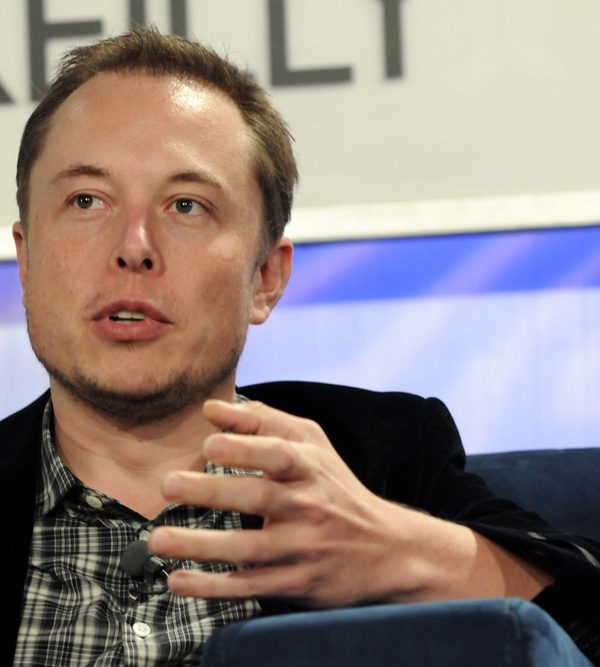
Musk was born in Pretoria, South Africa, in 1971. The Guardian, reporting from his schools, found that at one of them he "was viciously bullied. The hounding culminated with him being thrown down a set of stairs, beaten so badly that he was hospitalised." He left the country at 17. Asked in 2013 whether he had served in the South African army, he said: "No. I left at 17. Well, in part, in order to avoid conscription in the army," and: "You know, spending two years suppressing Black people doesn't seem to be a great use of time." He wrote in 2021: "I arrived by myself in Canada in '89 with ~CA$2500."
South Africa and the family's money
Where he grew up, why he left, and the two disputed questions about money: the emerald mine and what his father gave him.
In 2018 Musk's father, Errol Musk, told Business Insider South Africa that he had owned half of an emerald mine in Zambia. "We were very wealthy," he said. "We had so much money at times we couldn't even close our safe." Musk himself had said in a 2014 interview: "This is going to sound slightly crazy, but my father also had a share in an Emerald mine in Zambia." Since 2019 he has denied it. "He didn't own an emerald mine," he wrote that year, and in 2023: "I will pay a million Dogecoin for proof of this mine's existence!" His father later described his part as limited and said "there was never formal ownership." The fact-checking site Snopes concluded that the father at some point had a stake in a mine, and that it was "unable to find any evidence that showed money generated from his father's involvement in the mine helped Elon build his wealth in North America."
Musk has said he paid his own way. "We started Zip2 with ~$2k from me plus my overclocked home-built PC, ~$5k from my bro & ~$8k from Greg Kouri," he wrote in 2019. In the same post he said: "My Dad provided 10% of a ~$200k angel funding round much later, but by then risk was reduced & round would've happened anyway." Two years earlier he had told Rolling Stone that his father's claim to have given the brothers money to start the company was "not true": "He was irrelevant. He paid nothing for college." He says he left college about $100,000 in debt. His biographer Ashlee Vance, who put the father's contribution at $28,000, wrote in 2020: "Regardless of your opinion of him, he is a self-made billionaire." Vance also wrote that Musk "had the good fortune" of growing up "in an upper-middle-class home."
Degrees and immigration
He holds two bachelor's degrees and was admitted to Stanford. The record differs from his account on the dates, on Stanford, and, by one newspaper's reporting, on his right to work.
The University of Pennsylvania says: "Elon Musk earned a B.A. in physics and a B.S. in economics (concentrations: finance and entrepreneurial management) from the University of Pennsylvania. The degrees were awarded on May 19, 1997." A 2002 filing by PayPal said he received both degrees "in 1995." Musk told his biographer that he had agreed with the university to finish two credits later, and that "they awarded me the degree in '97 when it was clear I was not going to go to grad school." A 2007 lawsuit alleged that he had no physics degree. It ended in his favor and put copies of his diplomas in the public record.
Musk has written that he "dropped out of Stanford Eng/Phys grad school." Stanford University says he "applied and was accepted to a graduate program in materials science and engineering," and that it has no record of him enrolling. He said in a 2009 deposition that he called the department chair two days after the semester began to say he was not going to attend. In a 2005 email that later became a court exhibit, he wrote of applying: "Actually, I didn't really care much for the degree, but I had no money for a lab and no legal right to stay in the country, so that seemed like a good way to solve both issues."
The Washington Post reported on October 26, 2024, that Musk "worked illegally in the United States as he launched his entrepreneurial career," citing former business associates, court records and company documents. It reported that when a venture firm invested $3 million in his company in 1996, the funding agreement "stated that the Musk brothers and an associate had 45 days to obtain legal work status." Derek Proudian, a board member then, told the Post: "Their immigration status was not what it should be for them to be legally employed running a company in the U.S." In 2013, after his brother said on stage that they had been illegal immigrants, Musk said: "I'd say it was a gray area." He answered the Post's report the next day: "I was in fact allowed to work in the US." He became a U.S. citizen in 2002.
Status: No court or agency has made any finding. Immigration records are not public, and he has not published his.
Zip2, X.com and PayPal
He started two internet companies in the 1990s. Both made him money, and at each he lost or gave up the top job. He founded X.com, which merged with the company that created PayPal.
Musk started Zip2 in 1995 with his brother Kimbal and Greg Kouri. CNBC describes it as "an early online directory that helped users find nearby businesses and provide turn-by-turn directions." A venture capital firm invested $3 million in 1996, and the investors pushed for a professional chief executive. "Musk himself initially supported the idea," CNBC reported. He said later: "The company succeeded in spite of that person, not because of them," and: "At the time I thought it was a good idea," adding, "I didn't really know what I was doing." In May 1998 a planned merger with a rival, CitySearch, was called off.
Compaq announced on February 16, 1999, that it was buying Zip2, and paid more than $300 million. Rolling Stone reported that the sale "resulted in a $22 million check made out directly to Musk, which he used in part to start X.com." He was 27.
Musk founded X.com, an online bank, in March 1999. A rival company, Confinity, co-founded by Peter Thiel and Max Levchin, was developing a money-transfer product called PayPal. The two merged in March 2000 and kept the X.com name. PayPal's 2002 annual report calls Confinity "the creator of PayPal," and says the merged company dropped its banking business to focus on that product. Tesla's biography of Musk says he "co-founded PayPal."
Musk became chief executive of the merged company and held the job for about five months. In September 2000, while he was away on a trip that combined fundraising with his honeymoon, executives delivered letters of no confidence to the board, which replaced him with Thiel. The Washington Post reported two disputes behind it: Musk's push to move the system onto Microsoft software, and the name. His biographer Ashlee Vance wrote: "Musk kept championing X.com, while most everyone else favored PayPal." Musk said later: "It's not a good idea to leave the office when there are a lot of major things underway which are causing people a great deal of stress." He stayed on the board.
On July 8, 2002, eBay said it was acquiring PayPal "in a deal valued at $1.5 billion." The Washington Post reported that because Musk "was still the company's largest shareholder with nearly 12 percent of shares," he "made roughly $176 million from the sale." Rolling Stone gives about $180 million after tax, and reported that "he started SpaceX with $100 million, put $70 million into Tesla, invested $10 million into Solar City, and saved little for himself." In 2017 he bought back the X.com name, and in 2023 he gave it to Twitter.
The image
How he has been described, by himself and others, and what named people have said about it.
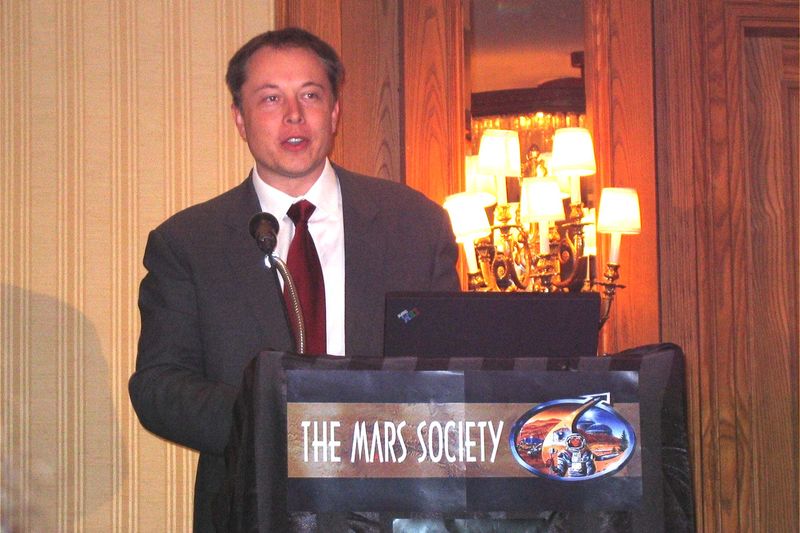
A biography SpaceX gave Congress in 2011 said: "At SpaceX, Elon is the chief designer, overseeing development of rockets and spacecraft." Asked by CBS's "60 Minutes" in 2012 whether he was self-taught, he said: "self-taught, yes, meaning I didn't, I don't have an aerospace degree." He added: "I read a lot of books, talked to a lot of people, and have a great team." Jim Cantrell, one of SpaceX's first executives, said in 2014: "He is the smartest guy I've ever met, period." Cantrell said Musk hired the rocket engineer Tom Mueller, respected "his deep knowledge and let him take care of things that he'd learned from years of research."
Jon Favreau, who directed the film "Iron Man," wrote in Time in 2010: "When I was trying to bring the character of genius billionaire Tony Stark to the big screen in Iron Man," he began, "I had no idea how to make him seem real. Robert Downey Jr. said, 'We need to sit down with Elon Musk.' He was right." In the same tribute Favreau wrote that Musk "designed the Falcon 9 booster" and "designed the Tesla," and that the startup "that put him on the map is called PayPal." Musk had a cameo in the sequel. Rolling Stone reported in 2017 that being cast "as the real-life Tony Stark" is one of the misunderstandings that "rankles Musk most."
Time named Musk its Person of the Year for 2021. Its editor wrote: "Person of the Year is a marker of influence, and few individuals have had more influence than Musk on life on Earth, and potentially life off Earth too." Musk has described his own working life this way: "There are way easier places to work, but nobody ever changed the world on 40 hours a week." Asked how many hours it takes, he wrote: "Varies per person, but about 80 sustained, peaking above 100 at times."
Forbes first listed Musk as a billionaire in 2012, estimating his fortune at $2 billion. By its count he "became the world's richest person for the first time in January 2021, with a nearly $190 billion net worth." On October 1, 2025, Forbes counted him as "the first ever person worth half-a-trillion dollars." Most of that is his stock in Tesla and SpaceX.