Tesla was founded in 2003 by Martin Eberhard and Marc Tarpenning. A Delaware judge found: "In 2004, Musk led Tesla's Series A financing round, investing $6.5 million." He became chairman that year and chief executive in 2008. In 2009 Eberhard, who had been removed as chief executive, sued Musk and Tesla, accusing Musk among other things of presenting himself as the company's founder. The case ended that September in an agreement whose terms were not disclosed, except that there were now five agreed founders, Musk among them. The same Delaware judge wrote: "although Musk was not at the helm of Tesla at its inception, he became the driving visionary responsible for Tesla's growth."
The company and public money
Who started Tesla, what government support it has had, and what Musk has said about subsidies.
Tesla borrowed $465 million from the U.S. Energy Department in 2010 and repaid it nine years early, in May 2013. The Los Angeles Times counted an estimated $4.9 billion in government support for Tesla, SolarCity and SpaceX together as of 2015, including grants, tax breaks, discounted loans and credits to buyers. The Washington Post counted $38 billion for his businesses over about 20 years as of 2025; most of that was contracts paid to SpaceX, and it included $11.4 billion Tesla collected by selling regulatory credits to other carmakers. Musk wrote in July 2024: "Take away the subsidies. It will only help Tesla. Also, remove subsidies from all industries!" Asked that December about the $7,500 tax credit for buyers of electric cars, he said: "I think we should get rid of all credits."
California's rules gave carmakers extra zero-emission credits, which can be sold, for electric cars that could be refueled quickly. In 2013 Musk demonstrated swapping a Model S battery in about the time it takes to fill a tank. A trade publication reported that the ability to swap batteries let Tesla "maximize the California zero-emission vehicle credits it earns for each Model S it sells," and that in the first quarter of 2013 "those credits made the difference between profit and loss for Tesla Motors." Tesla built one swap station. In June 2015 Musk told shareholders that of about 200 owners invited to try it, only four or five did. "People don't care about pack swap," he said.
What he told investors, and his pay
One tweet in 2018 led to a fraud charge, a settlement and a trial. Musk settled with the regulator and won the trial. His pay has been to court three times.
On August 7, 2018, Musk tweeted: "Am considering taking Tesla private at $420. Funding secured." Tesla's stock closed up 10.98% that day. On September 27 the Securities and Exchange Commission sued him for securities fraud, alleging: "In truth and in fact, Musk had not even discussed, much less confirmed, key deal terms, including price, with any potential funding source." It alleged he had rounded the price up to $420 because of "the number's significance in marijuana culture" and thought his girlfriend "would find it funny, which admittedly is not a great reason to pick a price." Two days later he settled. He agreed to step down as Tesla's chairman for three years, to pay a $20 million penalty, and to have a Tesla lawyer approve his statements about the company in advance. Tesla paid another $20 million.
Status: Musk later said he settled only to save the company, and that it was "like having a gun to your child's head." The court order is still in force as far as any public record shows.
In February 2019 the SEC asked a judge to hold Musk in contempt over another tweet; the two sides settled that by spelling out which statements need approval, and the judge made no contempt finding. In 2022 Musk asked the court to end the order, saying the SEC was using it to harass him. Judge Lewis Liman refused, writing that "none of these arguments hold water." A federal appeals court agreed in May 2023, saying it saw "no evidence to support Musk's contention that the SEC has used the consent decree to conduct bad-faith, harassing investigations of his protected speech." On April 29, 2024, the Supreme Court declined to hear his appeal.
Tesla investors sued Musk and Tesla over the same tweets. Before the trial, the judge ruled that the tweets were false and told the jury to treat them that way. Musk testified that he believed he had lined up the money from Saudi Arabia's Public Investment Fund. His lawyer conceded the tweets were "technically inaccurate." On February 3, 2023, after less than two hours, the nine jurors found Musk and Tesla not liable. A federal appeals court upheld the verdict in November 2024.
In 2016 Tesla bought SolarCity, a solar panel company founded by Musk's cousins, of which he was chairman and the largest shareholder. Shareholders sued, saying he had pushed Tesla into rescuing it. After a trial, a Delaware judge found the board's process "far from perfect" and the price fair, and ruled for Musk. Delaware's Supreme Court upheld that on June 6, 2023, writing that "the trial court's decision is supported by the evidence." The other directors had settled for $60 million, paid by insurance, without admitting fault.
In 2018 Tesla's board gave Musk a pay package of stock options worth up to $55.8 billion. A shareholder sued. On January 30, 2024, a Delaware judge, Chancellor Kathaleen McCormick, cancelled it. She wrote that "The process leading to the approval of Musk's compensation plan was deeply flawed," and that the board "never asked the $55.8 billion question: Was the plan even necessary for Tesla to retain Musk and achieve its goals?" Musk posted that day: "Never incorporate your company in the state of Delaware." Tesla moved its incorporation to Texas that June. On December 19, 2025, Delaware's Supreme Court restored the package and awarded the shareholder $1. It wrote that cancelling it "leaves Musk uncompensated for his time and efforts over a period of six years." It did not decide whether the judge's findings about the board were right: "the Justices have varying views on the liability determination." In June 2026 Musk exercised the options, on about 304 million shares.
On November 6, 2025, Tesla's shareholders approved a new pay package for Musk. The company's general counsel said over 75% voted in favor. NBC News reported that it would give him shares "worth up to 12% of the company if Tesla's market capitalization rises to at least $8.5 trillion and it meets 12 operational milestones." The milestones include 20 million vehicles delivered and 1 million robotaxis in commercial operation. Norway's sovereign wealth fund voted against, saying the new shares would dilute existing ones.
Source
NBC News
Reuters reported in July 2023, citing a person familiar with the software's early design, that about a decade earlier Tesla had written its range meter to "show drivers 'rosy' projections for the distance it could travel on a full battery," and that "The directive to present the optimistic range estimates came from Tesla Chief Executive Elon Musk, this person said." It reported that Tesla had created a "Diversion Team" to cancel service appointments about range. Tesla and Musk did not respond to Reuters, which wrote that it "could not determine whether Tesla still uses algorithms that boost in-dash range estimates." South Korea's competition regulator had fined Tesla about $2.1 million earlier that year over the ranges advertised on its Korean website. Tesla disclosed in October 2023 that the U.S. Justice Department was looking into vehicle range, among other subjects.
Status: No U.S. charge, fine or court finding on range was found. Owners who sued were sent to private arbitration in March 2024, in a ruling that did not address their claims. Tesla called the claims "unmeritorious."
Workers
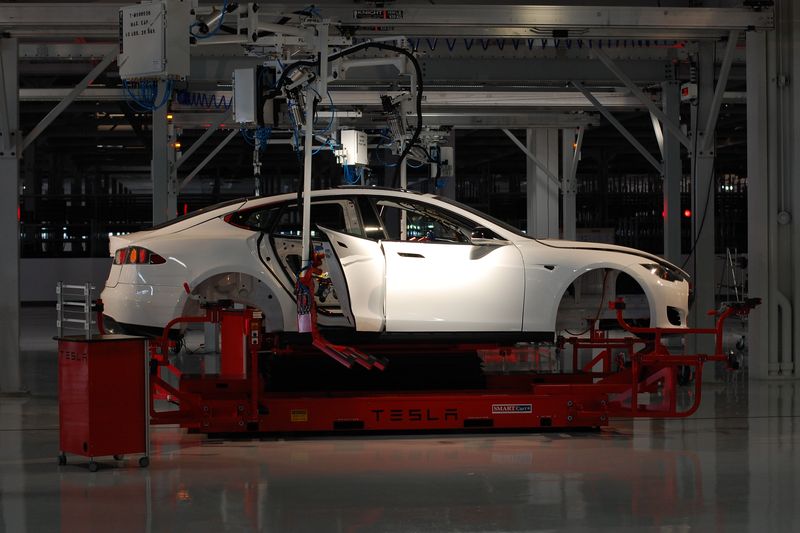
Tesla's main U.S. car factory is in Fremont, California. These are the documented cases about how workers there and elsewhere were treated, including the ones Tesla won.
Owen Diaz, a Black man who worked as a contract elevator operator at the Fremont factory in 2015 and 2016, sued Tesla over racist abuse there. On October 4, 2021, a federal jury in San Francisco ordered Tesla to pay him $137 million. Tesla's vice president of people wrote: "While we strongly believe that these facts don't justify the verdict reached by the jury in San Francisco, we do recognize that in 2015 and 2016, we were not perfect." The judge said the evidence supported the finding that Tesla was liable and cut the award to $15 million. Diaz chose a new trial on damages, and in April 2023 a second jury awarded about $3.2 million. Tesla and Diaz settled in March 2024 on confidential terms.
California's civil rights agency sued Tesla in February 2022 after an investigation of about three years, alleging that Black workers at Fremont were harassed and discriminated against. Tesla has denied wrongdoing and says it does not tolerate discrimination. In May 2026 a judge let most of the case go to trial, writing that he was not persuaded "that the existence of written policies alone is sufficient." The trial, before a judge without a jury, opened on September 21, 2026, and ended on October 30. A federal agency, the Equal Employment Opportunity Commission, filed its own suit in September 2023, alleging that Black employees at Fremont "regularly encountered graffiti, including variations of the N-word, swastikas," and other abuse. Tesla called that suit "a false narrative that ignores Tesla's track record of equal employment opportunity."
Status: No decision in California's case had been reported as of November 15, 2026. The federal case was not settled in mediation in April 2026 and has no trial date. Both are allegations.
A lawsuit filed in 2017 on behalf of Black workers at Fremont was certified as a class action covering about 6,000 workers. On November 14, 2025, a California judge reversed that, ruling that the case could not go forward as a class action because the plaintiffs' lawyers could not find 200 class members willing to testify. Tesla settled with three of the workers in June 2026 on confidential terms. The original complaint quoted an email Musk sent to factory employees in May 2017: "In fairness, if someone is a jerk to you, but sincerely apologizes, it is important to be thick-skinned and accept that apology." The workers' lawyer answered: "The law doesn't require you to have a thick skin."
During a union campaign at Fremont in May 2018, Musk tweeted: "Nothing stopping Tesla team at our car plant from voting union. Could do so tmrw if they wanted. But why pay union dues & give up stock options for nothing?" In March 2021 the National Labor Relations Board ruled that the tweet was an unlawful threat and that Tesla had illegally fired a union supporter, Richard Ortiz, and ordered Tesla to have Musk delete the tweet. On October 25, 2024, the full federal appeals court in New Orleans threw out the board's order. It held that the board "exceeded its authority by ordering Musk to delete his tweet," and wrote: "we do not reach the merits of whether the tweet" broke the law. It sent the firing back to the board.
Mechanics at Tesla's repair shops in Sweden went on strike on October 27, 2023, because the company would not sign a collective agreement. Musk called the action "insane." That November he said: "I just don't like anything which creates a lords and peasants sort of thing," and: "I think the unions naturally try to create negativity in a company." The union ended the strike in August 2026 without an agreement, saying Tesla had bought out its remaining striking members. Tesla's Swedish arm has said its workers have "equivalent or better agreements" than a collective agreement would give.
In 2017, after a workers' group reported high injury rates at Fremont, Musk emailed employees: "Going forward, I've asked that every injury be reported directly to me, without exception." He said he would meet injured workers and then "go down to the production line and perform the same task that they perform." In April 2018 the news organization Reveal reported that Tesla had left serious injuries off the logs the law requires. Tesla answered: "We have never in the entire history of our company received a violation for inaccurate or incomplete injury record-keeping." In December 2019 California's workplace safety agency issued Tesla a $400 citation for 14 injuries or illnesses it said were not properly recorded. Bloomberg reported that an agency memo found Tesla's yearly summaries to the government incomplete: "For 2016, 44% of the incidents weren't included."
Status: Tesla appealed the citation. How the appeal ended was not found.
Victor Gomez Sr., an electrician working for a contractor, died at Tesla's factory in Austin, Texas, on August 1, 2024. On January 31, 2025, the federal Occupational Safety and Health Administration issued Tesla three citations labeled "serious," of $16,550 each. One says an employee "was working in close proximity" to energized parts without proper protective equipment. His family has sued, alleging the electrical panel he was inspecting was supposed to be switched off. Musk and Tesla did not respond to Reuters.
Status: Tesla contested the citations. The outcome was not found.
On April 15, 2024, Musk told Tesla's employees by email that the company had "made the difficult decision to reduce our head count by more than 10% globally. There is nothing I hate more, but it must be done." Tesla had more than 140,000 employees at the end of 2023. Reuters, which saw the email sent to those laid off, reported that the dismissals were effective immediately. Musk posted the same day: "About every five years, we need to reorganize and streamline the company for the next phase of growth."
Factories and cars
What regulators found about pollution from the Fremont factory and about defects in Tesla's cars other than driver assistance. A recall is a repair, not a fine, and regulators have also ruled in Tesla's favor.
In February 2022 the U.S. Environmental Protection Agency said it "found Clean Air Act violations" at the Fremont factory, and Tesla "agreed to pay a $275,000 penalty." On June 25, 2024, the hearing board of the regional air quality agency ordered Tesla to fix recurring problems at the factory's paint shops. The agency said Tesla had released toxic air contaminants "without proper abatement, resulting in over 112 Notices of Violation since 2019." Tesla did not respond to the AP. On June 5, 2026, the agency issued 17 more notices in one day, and it confirmed it was investigating whether Tesla had submitted inaccurate emissions reports.
Status: The 2024 order stands. The 2026 notices and the investigation were pending as of November 15, 2026, and no penalty for the notices issued since 2019 was found.
Reuters reported on December 20, 2023, from Tesla documents and interviews, that "tens of thousands of Tesla owners have experienced premature failures of suspension or steering parts," and that Tesla had blamed drivers. In 2020 a Tesla lawyer told the federal highway safety agency: "There is no defect in the subject components and no associated safety risk." Tesla had recalled the same parts in China. Reuters wrote: "NHTSA has not ordered Tesla to take any action on the parts the company recalled in China." Tesla did not answer Reuters before publication. Afterward it said the article "leads with a wildly misleading headline and is riddled with incomplete and demonstrably incorrect information."
Status: No recall, order or finding by a U.S. regulator following the report was found as of November 15, 2026.
Tesla's doors open with electric latches, and the manual releases can be hard to find. On September 16, 2025, the federal highway safety agency opened an evaluation of about 174,290 Model Y cars after nine reports of parents unable to open a door to reach a child. Bloomberg reported that it had found "at least 15 deaths in a dozen incidents over the past decade in which occupants or rescuers were unable to open the doors of a Tesla that had crashed and caught fire." In July 2026 the agency turned down a request to investigate the Model 3's door release, saying the issue was better handled by a safety rule for all carmakers, and began work toward one. Tesla's chief designer said in 2025 that the company was working on a redesign.
Status: No recall and no finding of a defect had been reported as of November 15, 2026. Lawsuits by families are pending.
Tesla began delivering the Cybertruck at the end of 2023. In April 2024 it recalled 3,878 of them because the accelerator pedal's pad "may dislodge and become trapped by the interior trim." In March 2025 it recalled more than 46,000 because an exterior panel could come off while driving; the safety agency had no reports of crashes or injuries from it. A news report called that the eighth recall of the truck. Another followed in April 2026, for wheels on 173 trucks.
The federal highway safety agency has twice turned down requests to investigate or recall Teslas over sudden acceleration. In January 2021 it said that "in every case with data available for review, evidence showed the problem was caused by pedal misapplication," meaning the driver pressed the wrong pedal. In March 2026 it denied a second petition, writing that it "has not found evidence of a safety defect in Tesla vehicles as described in the Petition." The Insurance Institute for Highway Safety gives the 2025 Model Y its highest crash safety award.
Tesla and his politics
In 2025 Musk worked in the Trump administration while running Tesla. These are the documented effects on the company. Sources give several causes for its falling sales, and they are all given.
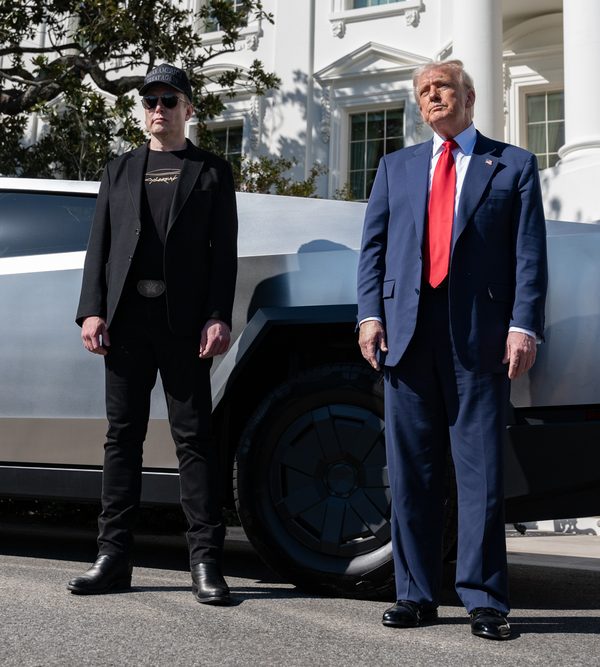
On March 11, 2025, President Trump chose a Tesla on the White House driveway with Musk beside him. He had announced the night before that he would buy one as "a show of confidence and support for Elon Musk, a truly great American." He told reporters he would write a check for the car. Tesla's stock "increased nearly 4% on Tuesday after dropping almost 48% since Trump took office in January." Senator Elizabeth Warren and three other senators asked the Office of Government Ethics to investigate, writing that presidents are exempt from the ban on endorsements and Musk was not. The office said it would not comment.
Status: No ruling, finding or penalty over the event was found.
Tesla's profit in the first three months of 2025 fell 71%. The AP wrote that the results came "as the company struggles to sell cars to consumers opposed to Musk's role in the Trump administration," and Musk said he would give more time to Tesla. For the year, Tesla delivered 1.64 million vehicles, down 9%, and lost its place as the world's largest maker of electric cars. The AP attributed the second yearly fall in a row to "a customer revolt over Elon Musk's right-wing politics, expiring U.S. tax breaks for buyers and stiff overseas competition." Tesla's stock ended 2025 up about 11%.
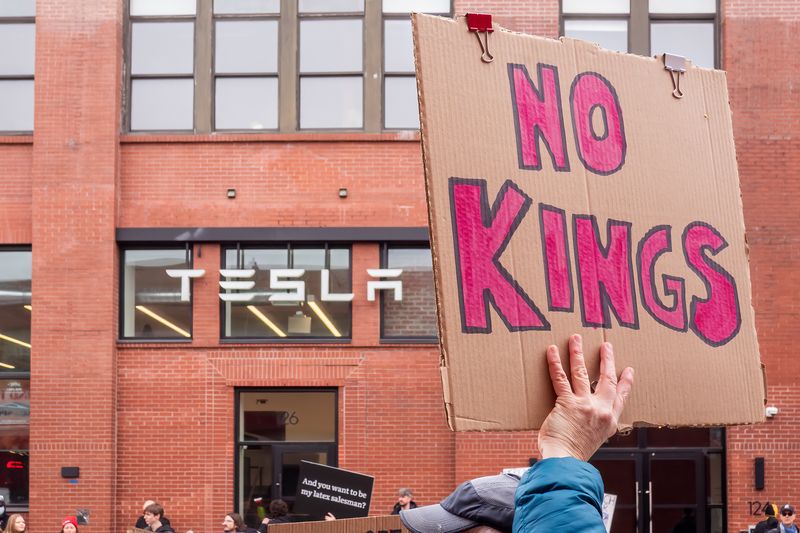
Protests under the name "Tesla Takedown" were held outside Tesla showrooms in early 2025. Separately, Tesla cars and buildings were attacked. On March 20, 2025, Attorney General Pam Bondi announced charges against three people accused of destroying Tesla cars or property. On April 30 the Wall Street Journal reported that Tesla board members had contacted search firms about a successor to Musk. The board's chair, Robyn Denholm, said the report was "absolutely false" and that the board was "highly confident" in Musk. Musk called it a "deliberately false article."